The Maul
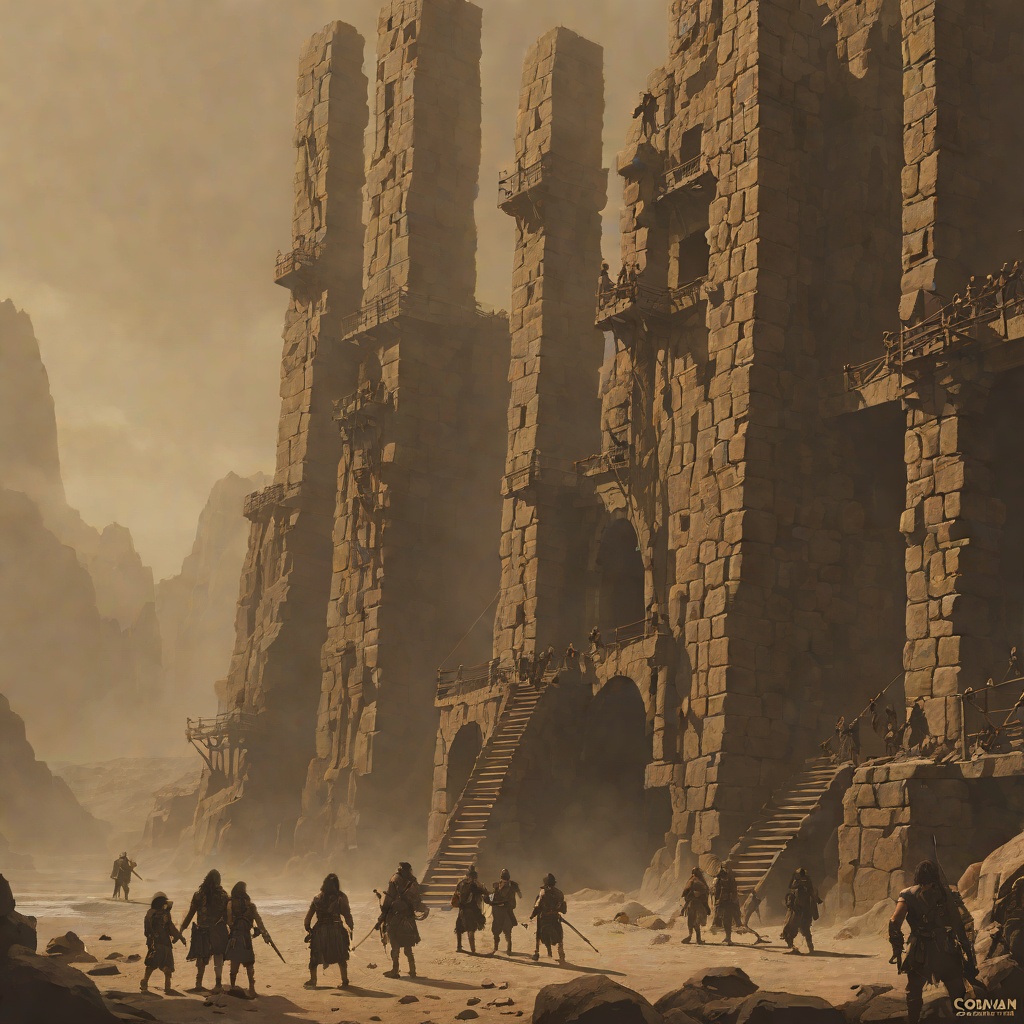
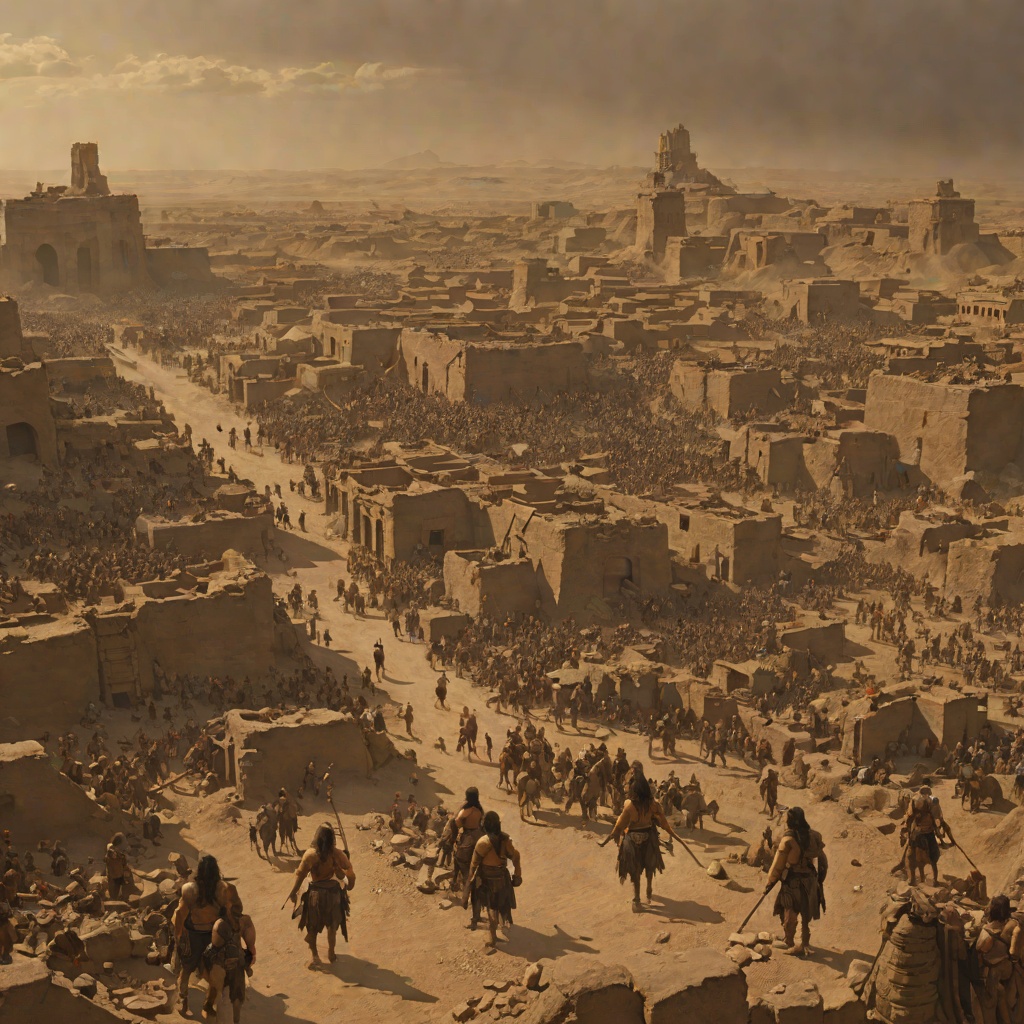
Conan the BarbarianThe Maul, also called the Thieves' Quarter, is the criminal heart of Shadizar, the city of Zamora. It is a district defined by its lawlessness and its role as a marketplace for stolen goods, a stark counterpoint to the fashionable boulevards and stately trees that line the city's more respectable avenues. For the young Cimmerian Conan, newly arrived in the city, The Maul is not merely a place of refuge but the very stage upon which his destiny begins to unfold, a place where his barbarian instincts are both tested and sharpened against the corruptions of civilization.
A Den of Thieves and a Gateway to Evil
The Maul is explicitly described as the lurking place of rapists, murderers, and perverts, a congregation point for thieves and the merchants who are less squeamish than their fellows about buying what those thieves steal. It is a world of ill-kept stalls that can be quickly abandoned should the constabulary come seeking their proprietors, a transient and dangerous environment where trust is a commodity as rare as the gems traded there. It is here that Conan, at his own request, is led by his new friend Subotai to find a jewel seller who buys craft from distant places. The purpose is to sell the jewel-set sigil he wears around his burly neck, a relic of his past that he hopes to convert into the means for food and lodging. The transaction, conducted with an elderly Shemite merchant who appraises the seller far more closely than the object for sale, reveals the deep suspicion and self-preservation that govern all interactions in this quarter. The merchant's assessment that the sigil is "old, very old," coming from an exotic land a thousand leagues or more to the east, hints at the weight of history and destiny that Conan carries with him, a past that The Maul, with its focus on the present and the tangible, cannot fully comprehend.
The Procession of the Serpent
The Maul's significance extends beyond mere commerce; it is the vantage point from which Conan first witnesses the public face of the Cult of Set. As he and Subotai linger on a broad, paved boulevard, they watch a procession led by girls and young women, some scarcely more than children, who dance and chant to the rhythm of myriads of tambourines. These figures, draped in soiled white garments and crowned with garlands of wilted flowers, move with glazed eyes, like dreamers walking in their sleep, their senses dulled by the incense that smoulders in brazen pots carried by robed men with shaven pates. The bizarre music and the sickly-sweet perfume are repugnant to Conan, and the strange behaviour of the marchers alerts his keen barbarian senses to the presence of a nameless evil. This evil is made explicit when a merchant steps forward to warn the Cimmerian, saying, "Stranger, beware. The servants of Set are deceivers. They worship Death." This revelation shocks Conan, to whom Death is ever the enemy, and the merchant elaborates that they would murder their own parents, thinking to confer a boon by relieving them of the burden of life. The procession culminates in a chant that awakens images long dormant in Conan's memory: "Doom... Doom... Thulsa Doom..." The name, spoken by flagellants who lash their naked flesh with whips made of serpents' hides and barbed with snakes' fangs, ignites a surge of anger and confusion in the young Cimmerian, marking the first time in the city that the spectre of his family's destroyer is made manifest.
The Heart of Darkness: The Tower of Set
The Maul's proximity to the Tower of Set, the infamous Stygian serpent god, makes it a place of constant, looming menace. As they pass the tower, Conan stares at its majestic height, and Subotai slyly asks if he knows what is in there, well guarded by the votaries. This question sets the stage for the companions' infiltration of the tower, a descent into a world of horror that begins in The Maul and ends in the cult's charnel house. Within the tower's dungeon-black stairwell, Conan and Subotai discover a chamber littered with corpses, male and female, some fresh, others far gone in decay, still others reduced to skeletal remains. This is the cult's sacrificial pit, a place where the faithful are offered to their god. The horror of this discovery is compounded when Conan, positioned below the leader Yaro, witnesses a beautiful young woman, her slender body scarcely shielded by a gauzy wisp of fabric, mount a stone corbel and, at Yaro's commanding gesture, fall or throw herself into the corpse-filled pit. The ceremony's climax is subverted when Conan, having slain the great serpent of Set in an adjoining rotunda, catches the falling girl in his arms, and she shrieks, "Our god is dead, is dead!" This act of defiance, born in the depths beneath The Maul, transforms the district from a mere den of thieves into the launching point for a direct assault on the city's most powerful and sinister institution.
A Tavern in the Thieves' Quarter
It is in a dingy tavern in the Thieves' Quarter that the fruits of this raid are displayed and the next stage of the adventure is planned. Fire roars on the stone hearth, and the pungent smoke curls against soot-blackened rafters, but it does not dim the rainbow brilliance refracted by the hundred polished facets of the Serpent's Eye, the rubiate gem stolen from the cult. Three cloaked figures—Conan, Subotai, and Valeria—hunch conspiratorially around the jewel as it lies on the rough oak table, shielding it with their bodies from the casual observation of strangers. Subotai sighs, "By Nergal, but it's beautiful!" and Valeria drawls her agreement, raising her wine goblet to her lips without diverting her attention from the object of her admiration. This scene captures the essence of The Maul: a place where the most sacred and the most profane objects are reduced to commodities, where a gem of immense power and religious significance becomes a prize to be gloated over in a smoky, low-ceilinged room. It is the perfect setting for the cynical, pragmatic worldview that The Maul fosters, a worldview that Conan, despite his barbarian origins, is quickly learning to navigate.
The Shadow of the Great Cleansing
The Maul is not merely a physical location but a symbolic one, representing the moral decay that the Cult of Set seeks to exploit and ultimately to cleanse. The cult's rhetoric, as heard in the great temple where the Faithful of Set gather, speaks of a "Great Cleansing" in which all who stand against them—parents, teachers, judges—shall depart in a night of blood and fire. This doctrine, which glorifies death and promises eternal life in the embrace of the Wise Serpent, finds its most fertile ground in the desperation and lawlessness of places like The Maul. The district is a testament to the failures of civilization, a place where the weak are preyed upon and the strong survive by their wits and their blades. It is from this cauldron of human misery that the cult draws its converts, offering them a perverse form of power and purpose. For Conan, The Maul is the antithesis of his own Cimmerian code, a place where the hardness of steel is the only law, and where the only truth is the one a man can carve with his own sword. It is a crucible that forges his resolve, a place where he learns the depths of human depravity and the necessity of his own violent response. The Maul, in all its squalor and danger, is the first true test of the man who will one day wear a crown won by his own sword.